
Close your eyes for a second.
Imagine the smell of freshly-spun candy floss drifting through the air. Or the sound of a popcorn machine doing its thing in the corner. Maybe a pick and mix station with those little paper bags and plastic scoops.
Suddenly, you’re not at a trade show anymore. You’re eight years old at a fairground, and you haven’t got a care in the world.
That’s the power of sensory experience. It bypasses logic and goes straight for memory and emotion. And if you can create that kind of moment on your exhibition stand, you’ve already won half the battle before you’ve said a word to a single visitor.
So, what can sensory experiences do for your brand at an event or exhibition?
Quite a lot, as it turns out. This blog explains all.
Why most exhibition stands only do half the job
Walk through any exhibition hall, and you’ll find most stands doing the same thing.
Strong graphics. Company logo. A screen playing a product video on a loop. Maybe a roller banner or two.
There’s nothing wrong with any of that. But it only engages one sense. Sight. And that’s a problem, because the brain processes sensory information much faster than text or visuals alone.
When you give your visitors something to hear, smell, taste or touch as well as see, you create a different kind of experience. One that sticks.
Most exhibitors are leaving a huge amount of value on the table by not thinking beyond what their stand looks like.
What are sensory experiences?
Before we go further, it’s worth being clear about what we mean by sensory experiences, because it’s not about creating novelty for its own sake or adding random distractions to your stand.
It means thinking about all five human senses when you’re planning your exhibition stand.
Sight covers everything from LED screens and lighting to well-designed wall graphics and visual displays.
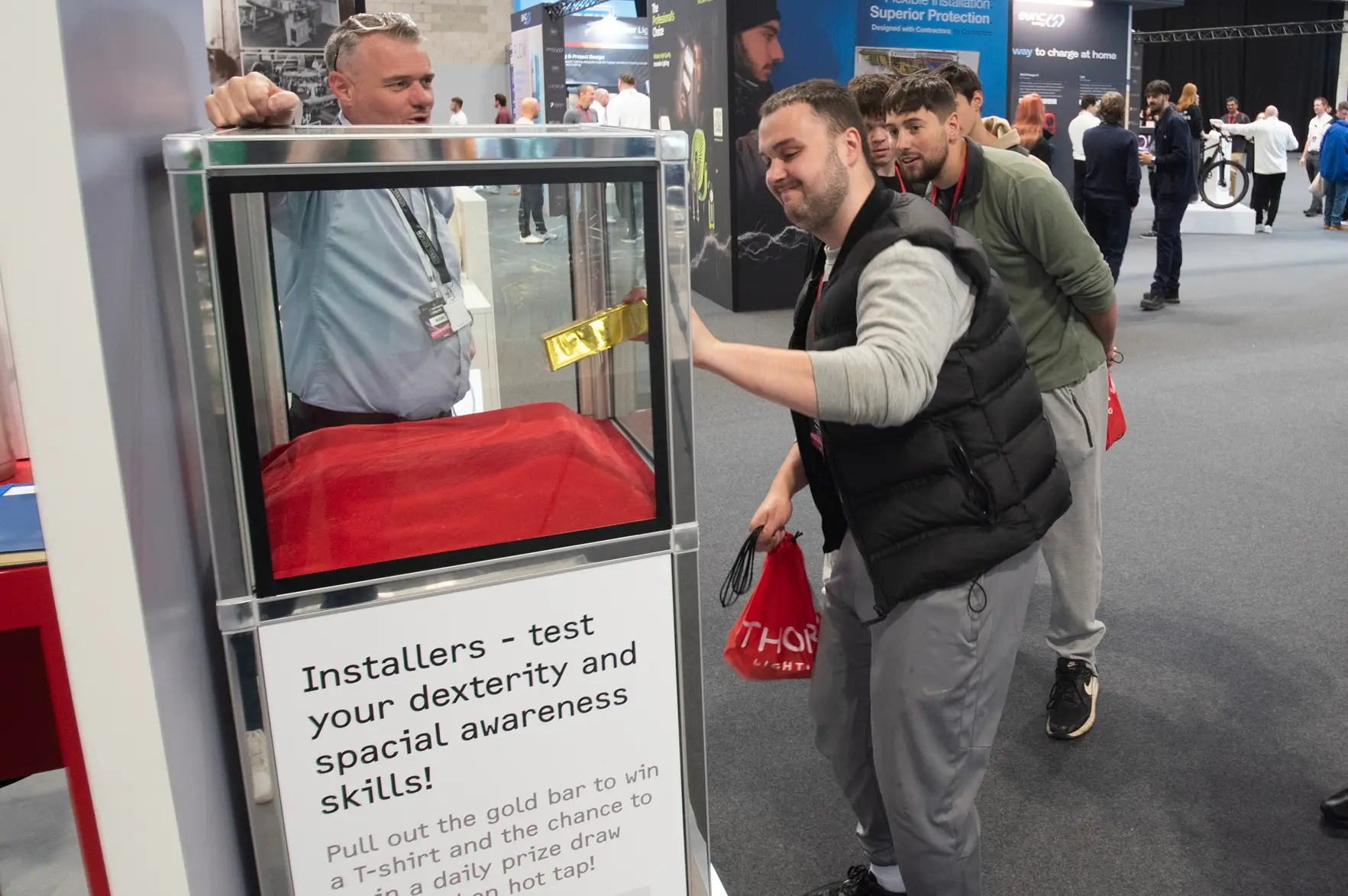
Touch includes interactive touchscreens, product demos and hands-on games.
Sound takes in everything from presentation audio and background music to acoustic pods where private conversations can happen without the noise of the hall bleeding in.
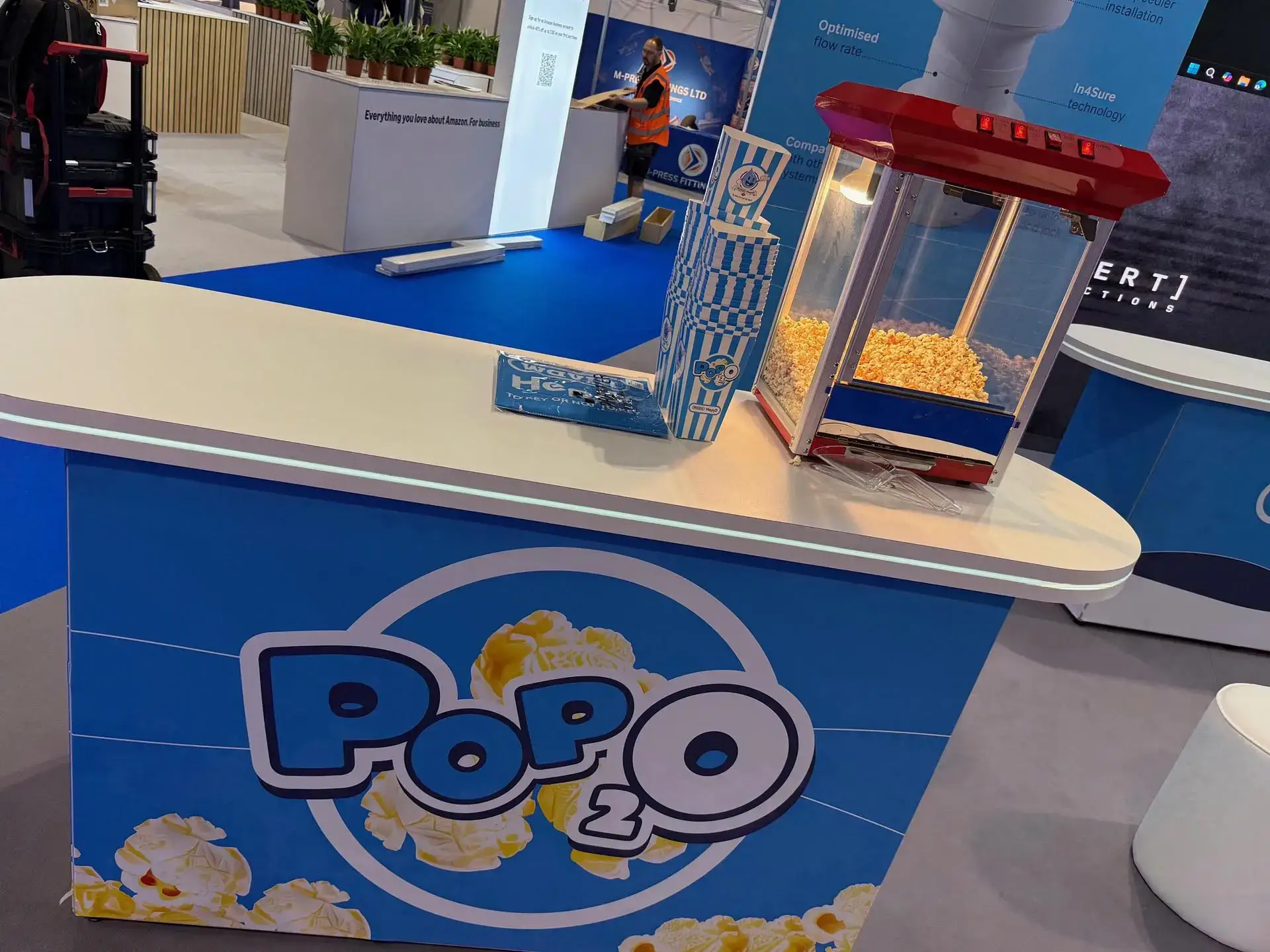
Smell and taste are interlinked. They’re where things like popcorn, coffee and candy floss come in, creating a draw, evoking memories and giving visitors a reason to stop, linger and chat.
Every sensory element should have a purpose, so the experience feels natural and considered, not bolted on.
What sensory experiences help you achieve
This is where it gets interesting for anyone thinking about return on investment.
Footfall is the most immediate benefit. Sensory elements do the hard work of drawing people in before they’ve consciously decided to visit your stand.
The smell of fresh coffee or popcorn travels. A great lighting installation or impressive visuals catch the eye from the other end of the hall. Visitors follow their senses and end up in front of your team without needing to be coaxed.
Once they arrive, engagement keeps them there. When you give your visitors something to do, whether it’s playing a game, handling a product or watching a live demonstration, they’ll stay longer. And longer dwell time means more opportunity for your team to have the kind of meaningful conversations that generate real leads.
There’s also the icebreaker effect. The awkward ‘Can I help you?’ exchange that nobody enjoys disappears when something is happening on your stand.
A darts challenge, a product someone can pick up and try or a barista making proper coffee gives your visitors and your team a natural reason to interact. The conversation starts itself.
Beyond the event itself, sensory experiences drive brand recall in a way that brochures and business cards can’t. They help your visitors remember how they felt on your stand long after they’ve forgotten what your pull-up banner said. If they tasted, won or laughed at something, that memory is anchored to your brand.
And finally, there’s the social media effect. Stands that create shareable moments get photographed and posted. That extends your reach well beyond the venue and keeps the conversation going long after the show has packed up and gone home.
It works for any industry
A common objection to sensory experiences is that they suit only consumer-facing brands and feel out of place in serious B2B environments. It’s understandable, but it misses the point.
The principle works universally. Only the execution changes.
A financial services firm might not want a candy floss machine (although why wouldn’t they?), but acoustic pods that allow private client conversations create a powerful sensory environment of their own, one that’s calm, focused and reassuringly professional. Likewise, a manufacturer that lets its visitors physically handle components and feel the quality of what they make communicates far more than a spec sheet ever could.
Whatever your sector, there will be sensory elements that feel right for your audience and your brand. The key is choosing them with intention.
How to get started
The best place to start is with your event goals, not with a list of ideas. What are you actually trying to achieve?
More footfall? Better quality conversations? Stronger product demonstrations? Clearer brand positioning?
Once you know what you’re working towards, it becomes much easier to identify which sensory elements will support those goals. And it doesn’t have to be complicated or expensive to be effective. A quality coffee machine and a friendly barista can do as much to draw a crowd and start conversations as a full-scale AV installation. So, start simple, be intentional, and build from there.
Make your stand work harder with sensory experiences from Exhibit Interactive
Exhibiting is a serious investment. Stand design. Floor space. Staffing and travel. The costs can add up quickly. Sensory engagement is one of the most effective ways to make sure that investment delivers.
When your stand gives visitors something to feel, taste, hear, smell and touch as well as see, you create experiences that people remember, talk about and associate with your brand long after the event is over.
And that’s where Exhibit Interactive can help. We start every project by looking at your event goals, your audience and your space. Then we work out which sensory solutions will elevate your exhibition stand beyond the rest.
So, if you’d like to explore how sensory elements could work for your next event, get in touch with our team. We’d love to help.
