You’ve committed the budget, booked the space and you’re feeling pretty confident about your next event.
After all, you’ve got genuinely good products or services, right?
Better than most of your competitors, if you’re being honest. Surely that’s enough?
Then reality hits.
The exhibition floor isn’t a rational environment where your prospects calmly assess your offering against your competitors’. It’s an overwhelming, exhausting sensory battleground where attention spans are measured in seconds, and decision-making happens on autopilot.
Your brilliant products or services? They’re competing against hundreds of other brilliant products or services. Plus coffee breaks, phone notifications, aching feet and the general fog of exhibition fatigue.
Nobody’s products or services sell themselves at an event. Not yours. Not anyone’s.
The exhibitors who consistently generate leads and close deals understand something crucial. Sensory experiences don’t just make their stands more interesting. They deliver measurable business outcomes.
So, if you’re planning your next exhibition stand, here’s what including some interactive and sensory elements can help you achieve.
Longer, more meaningful conversations
Walk past any exhibition stand and time how long visitors stay. Thirty seconds if you’re lucky. Most people glance, grab a brochure they’ll bin later, and move on.
Sensory experiences change this completely.
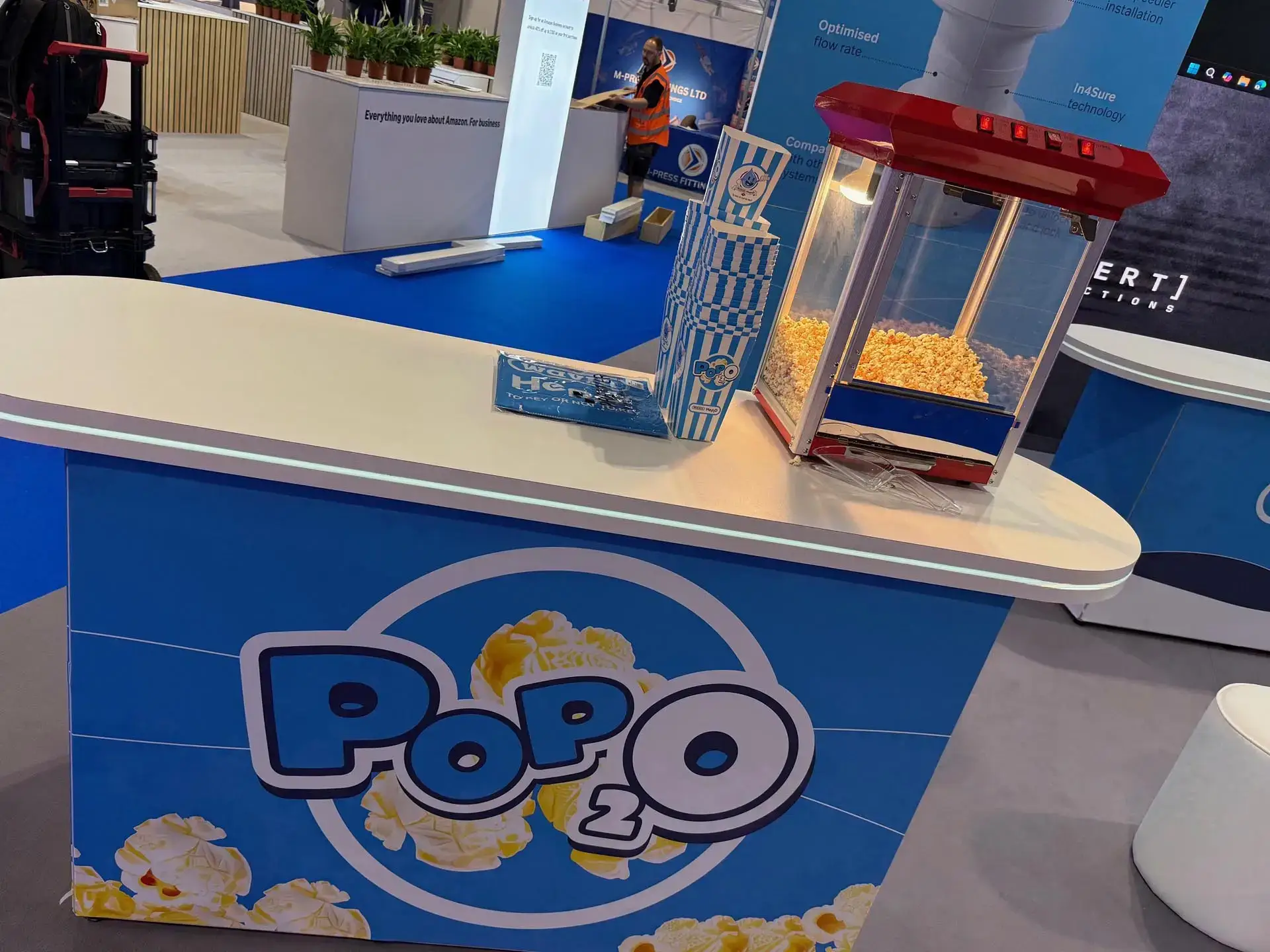
When there’s fresh popcorn popping or proper coffee brewing, people naturally linger.
They queue. They wait.
And while they’re waiting, your team has time to start proper conversations rather than rushed elevator pitches to people already walking away.
Interactive elements work the same way. Someone playing a darts challenge or testing your product hands-on isn’t checking their phone or planning their escape route. They’re engaged, present and genuinely interested in what you have to offer.
The psychology is simple. When people are comfortable and doing something enjoyable, they ask better questions. They reveal their actual challenges instead of offering polite small talk. They qualify themselves as genuine prospects rather than as tyre-kickers collecting freebies.
Take Wavin’s InstallerSHOW stand. The popcorn stall we built created a natural gathering point throughout the event. While visitors waited for their branded cones of sweet treats, Wavin’s team had time to understand their needs properly.
The result? Meaningful conversations with qualified installers rather than rushed exchanges with anyone passing by.
Better quality lead generation
Many exhibitors measure their success by counting business cards. Hundreds of them, carefully collected over two days, then filed away because 90% represent people who’ll never buy anything.
Quantity doesn’t always equal quality.
Sensory experiences filter for genuine interest in ways that brochures and banners can’t. Someone who queues to try your product demonstration or engages with your interactive display has already self-qualified as a serious prospect.
That’s because they’re not just passively receiving your information. They’re actively investing their time and attention to understand how your solutions work. That behaviour indicates they’re further along the buying journey than someone who grabbed your leaflet while speed-walking past.
Sensory experiences create natural self-qualification. People who aren’t genuinely interested in what you offer won’t queue for product demos. They won’t spend five minutes at your interactive touchscreen exploring technical specifications. They’ll move on to something that matches their actual needs. This matters more than most exhibitors realise.
Standing out in a crowded room
After viewing twenty similar stands, visitors’ brains switch to autopilot. Everything blurs together into one forgettable mass of corporate messaging and product displays.
The science backs this up. Our brains process sensory information 11 million times faster than text alone.
Multi-sensory stands bypass the cognitive overload that shuts down attention at busy exhibitions. They become landmarks on the exhibition floor.
‘Meet me at the stand with the Guinness bar’ works better than ‘Meet me at booth D47’ because it creates a memorable reference point. Visitors tell colleagues about interesting experiences during the event itself, generating word-of-mouth that pulls more people to your space.
Experiential stands also tend to be shared more on social media. ROBUS’s illuminated tunnel at Light & Building became Instagram-worthy without any encouragement. Visitors photographed it, shared it and tagged the brand.
Standing out isn’t always about being louder or bigger. It’s about creating moments worth remembering and sharing.

Building a brand that sticks
Research shows people forget 90% of what they see at exhibitions within a week.
All those carefully crafted messages and polished presentations? Gone.
Sensory memories work differently.
Smell and taste create memory triggers that persist for months. Someone smelling fresh coffee weeks after your event might suddenly remember your brand and the conversation they had at your stand. That’s not manipulation. It’s smart psychology.
Positive sensory experiences create positive brand associations that influence decision-making long after the memories fade. The emotional connection matters more than the information transferred.
Interactive challenges work the same way. The installers who played basketball hoops at Vitra’s stand won’t remember the specific product specifications discussed. But they’ll remember having fun, feeling welcome, and enjoying the experience. They’ll then attach those feelings to the brand itself.
This creates a halo effect that benefits your entire sales process. When your follow-up emails arrive, the recipients will recognise your brand with warmth. They’re more likely to take your calls, attend follow-up meetings and consider your proposals, because their emotional attachment to your brand already exists.
Demonstrating product value in action
Complex products are nearly impossible to explain with brochures and sales patter alone. Technical specifications mean nothing until people experience the actual benefits firsthand.
Touch solutions solve this problem.
When prospects can navigate your software themselves, test your equipment or experience your solutions in realistic conditions, they become easier to understand. People don’t need to imagine how something works. They can see it, feel it and prove it to themselves.
Interactive touchscreens let visitors explore features at their own pace. Live product demos show real-world applications with concrete benefits.
The psychological shift is powerful. When visitors experience something themselves rather than hearing about it second hand, they become advocates. They trust their own judgment more than your claims. That trust accelerates sales conversations and reduces objections.
Ready to make your exhibition investment count?
Sensory experiences aren’t luxuries for exhibitors with money to burn. They’re strategic tools that deliver specific business outcomes.
While your competitors rely on brochures and hopeful smiles, we can help you create sensory experiences that drive results:
- Longer conversations with qualified prospects.
- Better quality leads that convert.
- Brand associations that persist long after the venue empties.
- Product demonstrations that prove value without sales pressure.
- Measurable returns that justify your investment.
That’s what our interactive and sensory solutions can help you achieve.
At Exhibit Interactive, we design multi-sensory exhibition stands that deliver these outcomes consistently. We’ll work with you to understand your business objectives, then create experiences that turn your attendance at events and exhibitions into a genuine competitive advantage.
Get in touch to learn how our sensory solutions can help you achieve your event goals in 2026.