
AI design tools have made it far easier to picture your next exhibition stand.
You can describe what you want and within minutes, you have a stand in front of you, complete with your colours, your logo and a layout you can react to.
If you’ve been asked to pull together ideas for your next event, it’s a great place to start.
But getting an initial design for your stand is only the start of the process. Bringing it to life and creating a stand that works in the real world, is where the real skill lies.
The stands people remember aren’t the ones that just look good. They’re the ones visitors can smell from the next aisle, queue up to play on or find calm enough to have a proper conversation in.
So, an AI design can give you the look of your stand. However, the experience you create is what brings that design to life on the show floor.
In this blog, we explore how working with an experienced creative events design agency like ei can help you build on your AI design to create a show-stopping stand for your next event.
Start with AI. It’s a great way to find your look
Let’s start with what AI does well. It’s fast, it’s low-cost and it gives you something to react to.
You can try a dozen different colour schemes before settling on your favourite.
You can test a curved wall against a straight one, or a bold overhead banner against a lower, cosier layout.
You can put the design in front of your director and get a decision that might otherwise take weeks.
It also helps you work out what you like. Seeing an AI-generated design can tell you quickly whether your idea has legs. When somebody says, ‘I love the lighting, but the reception desk feels too corporate’, it gives you feedback you can work with.
This is exactly how we’d encourage you to use AI. Get your ideas down, share them with your colleagues and see what you agree on.
The design you end up with will be an image, though, and images engage only one sense. While the visual is important, your stand is a space that people will walk into and spend time in. So, the next step is to think about how it will smell, sound and feel, because that’s what turns a good stand into a memorable one.
Give your visitors a reason to follow their noses
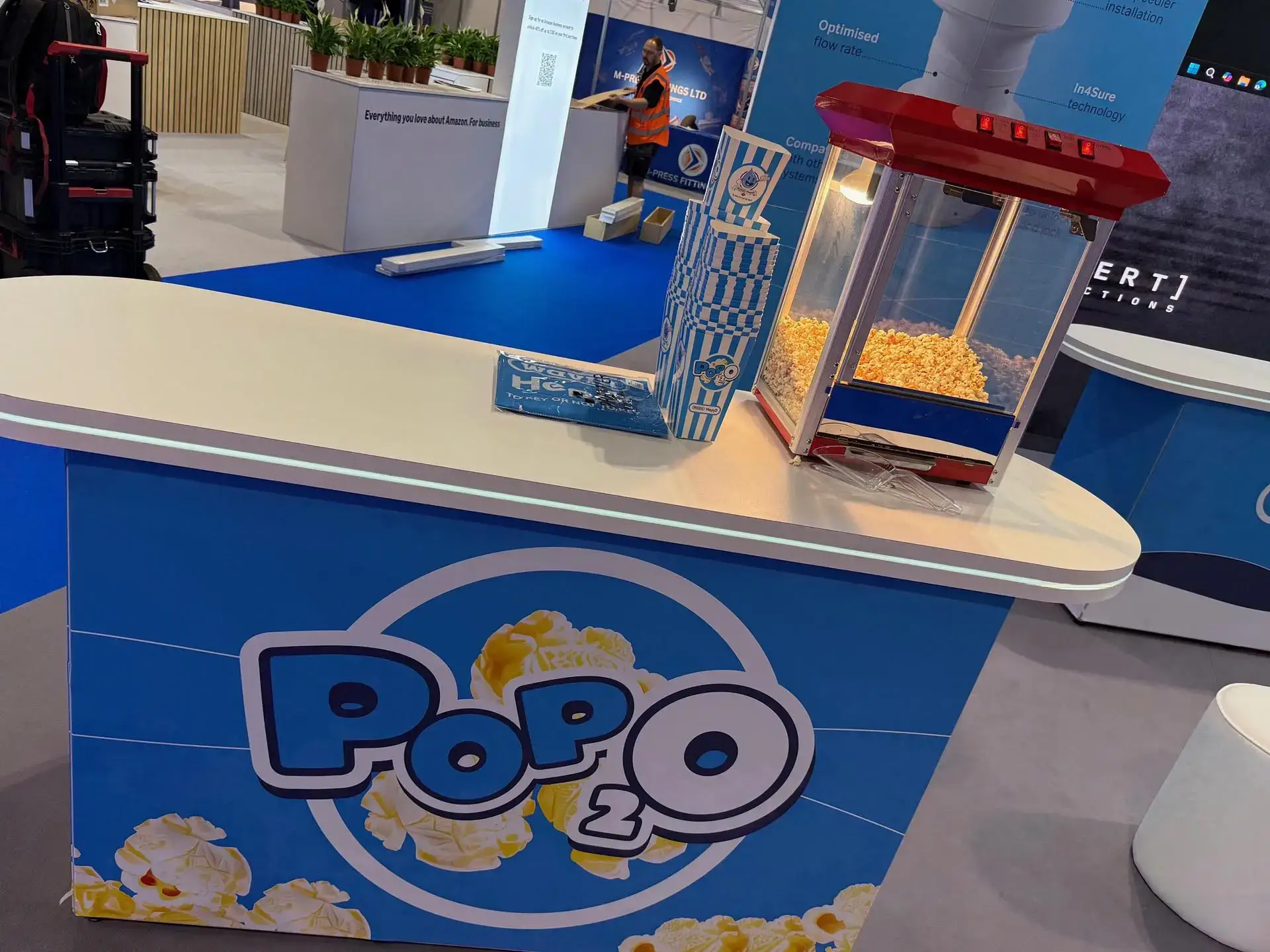
At InstallerSHOW, we built an interactive stand for Wavin UK that included a bespoke popcorn stall. The smell of warm, buttery popcorn drifted across the hall and drew people in from neighbouring stands. Demand was so high that the popcorn ran out before the final day.
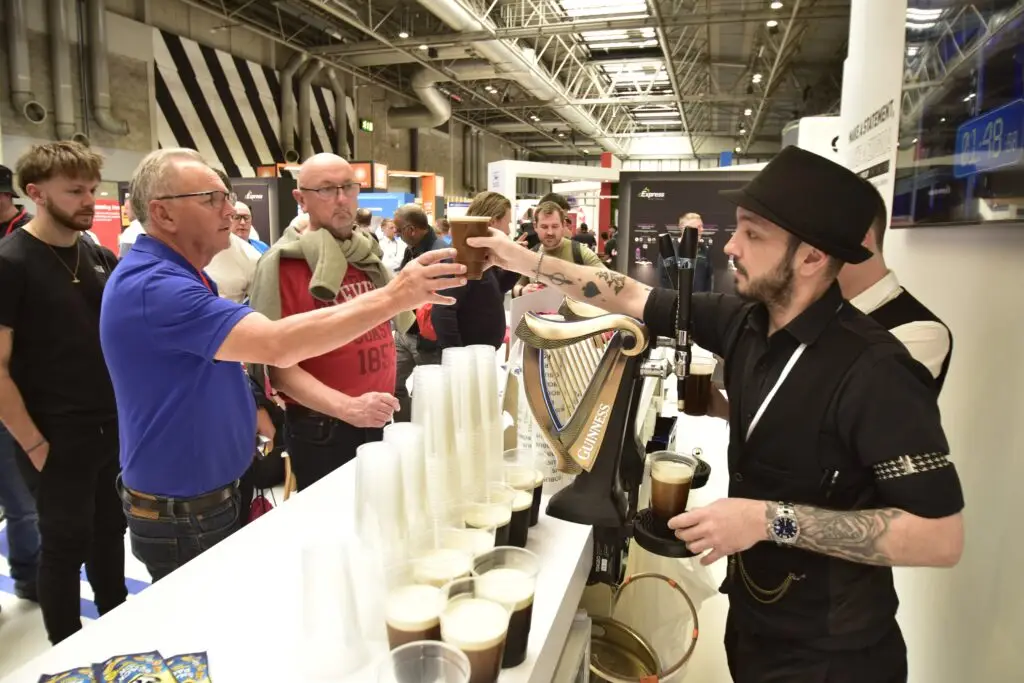
We saw the same effect with The LED Group at CEF Live. A custom-built Guinness bar gave the team a natural place to meet their trade customers and start conversations. It became the focal point of the stand.
Both were simple ideas, and both worked because they engaged people’s noses and taste buds as well as their eyes.
Scent is closely linked to memory, so a visitor who smells fresh popcorn, coffee or baked goods on your stand is more likely to remember your brand when they think back on the show.
Taste works in the same way. A stand that gives people something to eat or drink gives them a reason to stop and stay for a conversation. That takes as much planning as the walls and lighting do.
Here’s a tip for your AI design prompt. Ask it to add a coffee bar, a popcorn machine or a sweet treat to your brief to see how it looks. It’s a good way to show your colleagues what a hospitality area could add to your stand.
Once you’ve got the idea, we can work out how to make it happen in your venue. Areas serving food and drink need power, water, storage and the right location on the stand, and every venue has its own rules about what’s allowed.
Working through those details is part of our job, so you can focus on the concept, then let us sense-check it and bring it to life.
Sound shapes the atmosphere
Exhibition halls are lively places. Every stand has screens, speakers, presentations and conversations, and the noise adds up. Good acoustic design will help your stand feel comfortable in that environment.
Think about what you want to happen on your stand. Your team may want to deliver presentations to a crowd. A prospect may want to talk through pricing somewhere private. Visitors may want to try a product demo without straining to hear it. Each of these needs a different sound environment.
There are plenty of ways to create one. Acoustic panels can soften the background noise. Soundproof pods can create a private meeting space in the middle of a busy hall. Headsets let visitors listen to a product demo without adding to the din. Directional speakers keep audio inside the area it’s meant for, while hearing loops help visitors who use hearing aids.
You can show some of this in your AI design. A pod for private meetings or a presentation area with seating is easy to add to a brief. But only an experienced agency like ei will be able to work out where each area should sit so the loud and quiet zones suit your space, and suggest the right acoustic solutions to make them work.
Turn visitors into participants
The Wavin stand we mentioned earlier also featured a custom darts challenge. Visitors played for Wavin-branded goodies, with large queues throughout the event. The game was so popular that the team had to apologise when the giveaways ran out.
The benefit went beyond the fun. The queue kept people on the stand for longer, which gave Wavin’s team the chance to hold more useful product demonstrations and conversations.
Touch experiences work because people learn by doing. Interactive touchscreens, games and hands-on product demos turn passers-by into participants. It’s also easier to explain a complex product when visitors can pick it up and try it.
So, if you’ve got an idea for something interactive, put it in your AI design. Even a rough version will give your colleagues something to picture and discuss. It also gives your agency a clear starting point.
From there, we can help with the finer points that make an interactive element work well for your visitors, such as the right height for the screen, how many people can use it at once, where the queue will form or how to make it last for three days of constant use. We can also make sure it’s accessible to everyone.
Bringing the senses together
Each sense adds something. The skill lies in getting them to work together on the same stand.
The best stands zone their space. A scent-led attraction near the aisle draws people in. Games and demos work well in the middle, where a crowd adds to the atmosphere. Quieter meeting areas are best at the back, away from the noise. The mix also needs to suit your audience and what you want from the show.
So, if you’re using AI to explore some initial design ideas, here are some questions to ask yourself before you start creating your prompts:
- What do we want our visitors to feel when they visit our stand?
- Which areas should be lively and which should be calm?
- What could visitors get hands-on with?
- Where might people queue or gather?
- Which ideas suit our audience and what do we want from the show?
You don’t need to answer all of them. Even a couple of ideas will give your agency plenty to work with, and we’ll help you fill in the rest.
Bring your AI design to life with Exhibit Interactive
An AI design is a great way to start a conversation with an agency. It can help visualise what your stand might look you like, what your colleagues have agreed on and the direction you want to take. We’d rather receive that than a blank page.
From there, we’ll take your initial AI design and build on it. We’ll look at your goals, your audience and your space, then plan the sensory elements alongside the stand. We’ll also handle the practical details too, such as power, storage, acoustics, safe queuing and venue rules, so you don’t have to research them yourself. Then, we’ll build your stand in our workshop and install it at the venue.
Our interactive and sensory solutions cover all five senses, and we’ve built them into stands for clients across a wide range of sectors.
So, use AI to get your ideas moving. Then bring your design to us, however rough it is. We’ll help you create a stand that visitors can see, smell, taste, hear and touch.
Get in touch to start the conversation.
