
You’ve probably seen the demos.
Someone types a few prompts into an AI tool, and within seconds, there’s a polished 3D render of your exhibition stand on the screen. It’s branded, structured and looking pretty good.
If you’ve got a trade show coming up and a brief to write, it’s tempting to wonder whether you could just do that.
AI design tools have come a long way in a short time, and the exhibition industry is no exception. More brand and event managers are experimenting with them, and the results are getting harder to dismiss. Whether you’ve tried one already or you’re curious about what they can do, it’s worth understanding what you’re actually getting and where the limitations kick in.
This blog explains how AI design tools can help you plan your next exhibition stand and, crucially, where they fall short.
What can AI design tools produce?
Most AI design tools for exhibitors work in roughly the same way. You enter your stand’s dimensions, upload your logo or brand assets, choose a base structure from a library of templates, and let the tool apply your branding to the design. Some might generate a cost estimate at the same time.
The output can look impressive. Brand colours get applied across back walls and pillars. Product imagery is dropped into display areas. And you get a coherent visual concept on the screen in just a few minutes.
If you’ve been staring at a blank briefing document for three days, wondering where to start, that’s a useful thing to have.
What you’re looking at, though, is a visual. A convincing one, in many cases, but still a computer-generated render of what something could look like, not a design that’s ready to be built.
The difference between those two things is where it gets interesting.
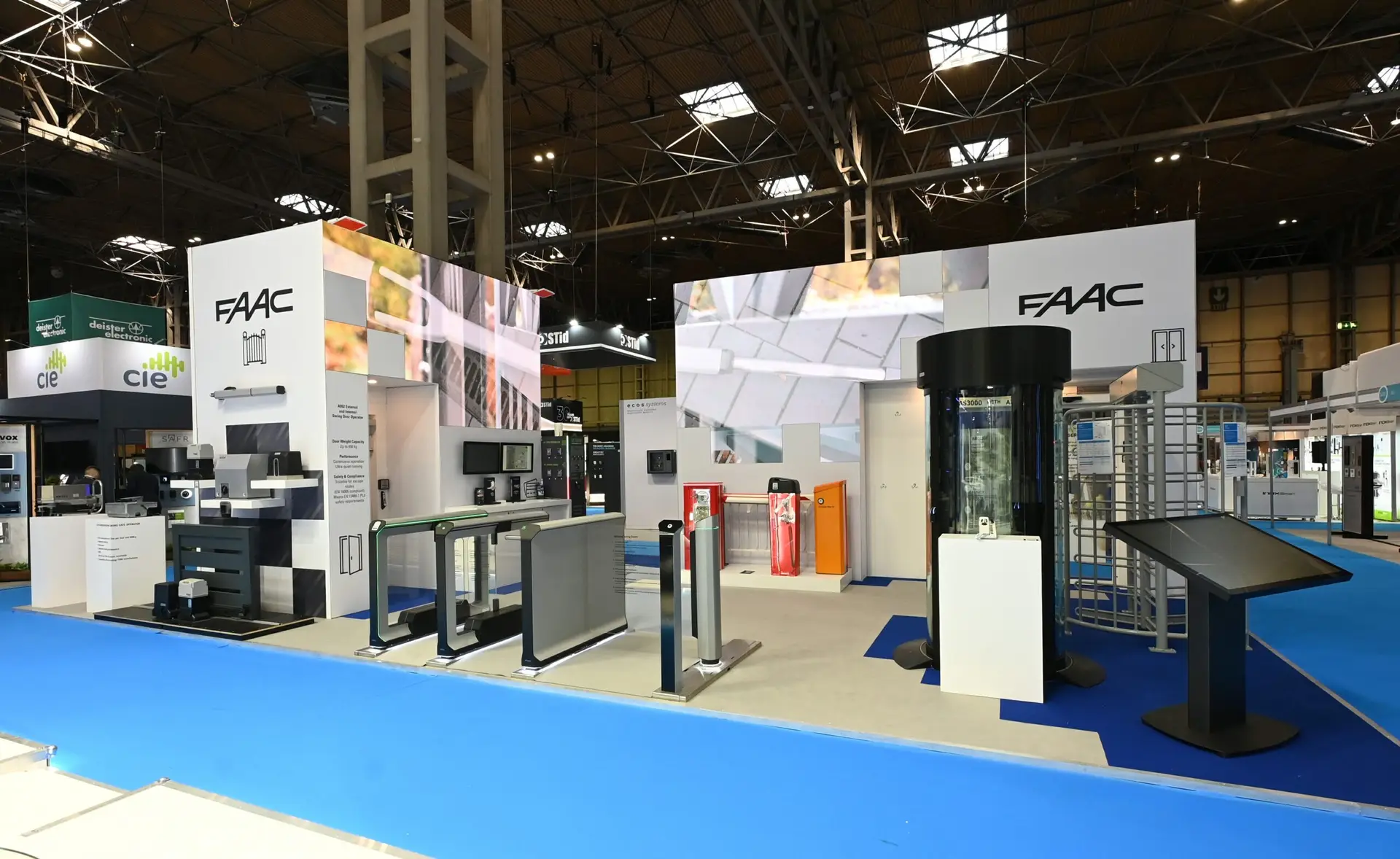
Where AI gets it right
The biggest practical benefit isn’t the output itself. It’s what the output does for your thinking.
A lot of people find it hard to articulate what they want when they’re briefing a creative exhibition design agency. They know roughly what they’re after, but getting that out of their head and into a document is a different matter. AI tools shortcut that problem. You can generate a concept, look at it, and say ‘Not that. Something more open, less corporate, with warmer colours”.
That’s useful information. It’s much easier to react to something than to describe it from scratch.
The same logic applies within your business. Getting your boss or finance director to sign off on a stand design can be slow when all you’ve got is a written brief. A visual, even a rough AI-generated one, gives your stakeholders something to respond to and tends to move the conversation forward faster.
AI tools are also useful for exploring your options without making a big financial commitment. You can try different stand structures, layouts and brand applications in minutes. That kind of experimentation would eat into a designer’s time if you were doing it through an agency. Doing it yourself first means you go into those conversations with a clearer sense of what you want.
The gap between the AI design and the real thing
Here’s where things get more complicated. An AI tool doesn’t know that your stand is at the NEC, that the hall you’re in has a 4.5-metre ceiling height restriction, and that the dramatic overhead structure it’s just generated for you won’t pass the venue’s rigging regulations. It doesn’t know that the open, airy layout it’s produced will work only if your stand faces a main aisle, which it won’t have, because you’ve booked a corner plot.
It doesn’t know your budget. It can generate a cost estimate, but that estimate is based on a standard configuration, not on the specific material choices, complexity and logistics involved in building your stand at your venue on your timeline.
It also doesn’t know how visitors will move through a show like yours. The entrance might work better on the left, not at the centre, because of where the main footfall comes from at that particular event. The product demo area might work better at the back, once you’ve drawn people in, not at the front, where it could create a bottleneck. These are the kinds of things that only become obvious once you’ve built a few hundred stands and seen what happens when you get them wrong.
None of this is a reason to dismiss AI tools. It’s just a reason to be clear about what they are, a starting point, not a finished solution.
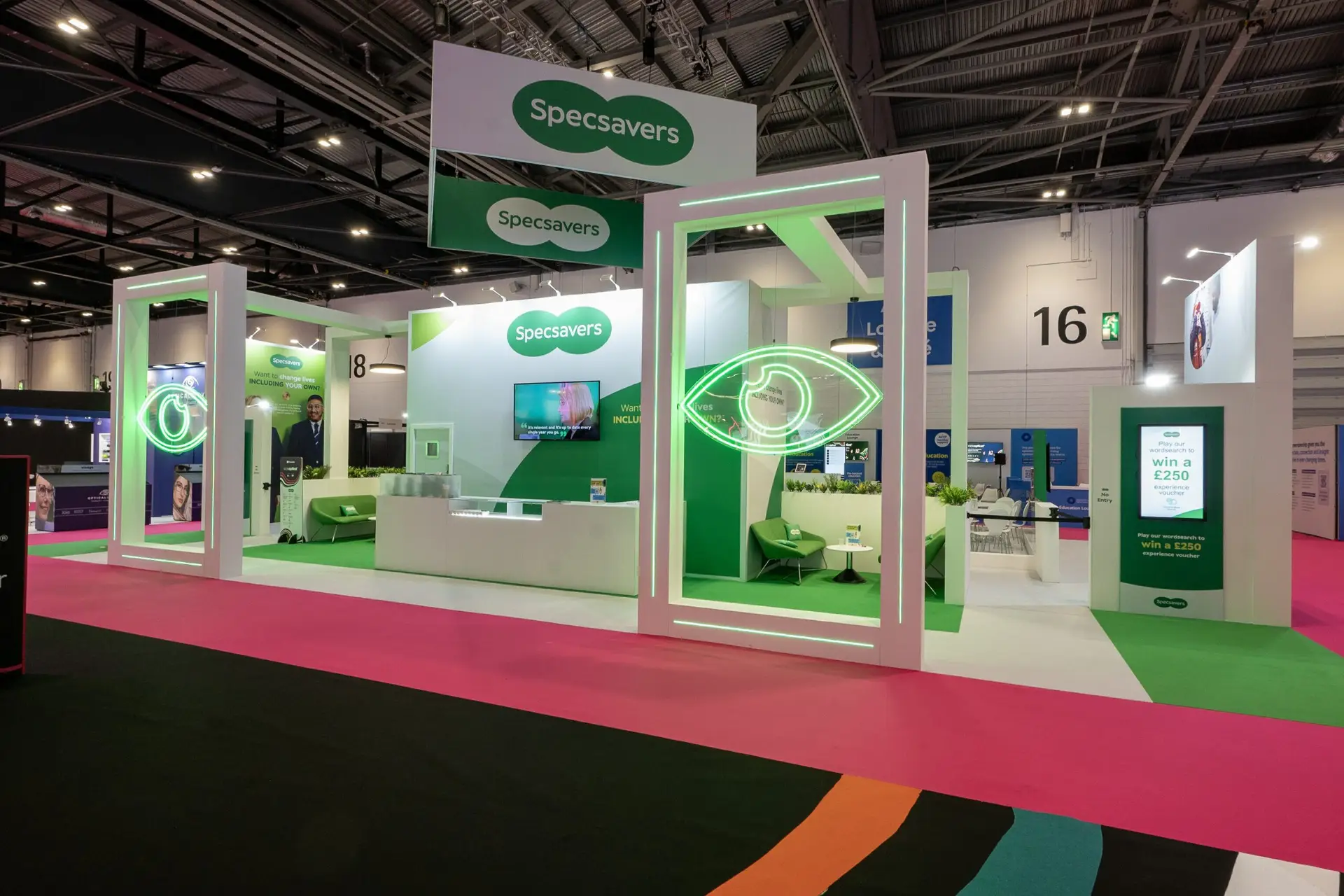
What an experienced agency brings to the table
A good exhibition design agency like Exhibit Interactive won’t just take your brief and produce a nicer version of what you’ve already got. We’ll ask questions the AI never will.
What are you trying to achieve at this show?
How does that differ from last year?
Who are you trying to talk to?
What do you need them to do when they’re on your stand?
What’s your setup window, and have you checked the venue’s build regulations?
How much of your stand needs to travel to other shows, and does that change the system you should be using?
The answers to those questions shape everything, from the layout and materials to the build and logistics. They’re also the things that prevent expensive problems down the line. A stand that looks great on screen but can’t be assembled in the time you have, or falls foul of a venue regulation you didn’t know about, or costs twice what you budgeted once the real specification is drawn up, are all outcomes that experience, not AI, can help you avoid.
There’s also the creative side of it. AI tools work from templates and prompts. An experienced designer works from an understanding of your brand, your audience and your objectives, and brings ideas to the table that you wouldn’t have thought to ask for. The best stands at any show aren’t the ones that came out of a library of templates. They’re the ones where someone asked the right questions about and built something around the answers.
So, are AI design tools worth using?
Yes. If you’re in the early stages of planning a stand and want something to react to, experiment with or show to your stakeholders, AI design tools are a fast and cost-effective way to get you there. They’ll give you a starting point, help you clarify your thinking, and take some of the friction out of the early brief-writing process.
What they won’t give you is a detailed technical drawing for a stand that’s ready to build, or the experience to know what needs to change before it is.
That’s where a conversation with Exhibit Interactive comes in. Whether you’ve got an AI concept you want to develop further, or you’d rather start from scratch with a proper brief, we’re here to ask the right questions and make sure your stand works as well on the show floor as it looks on-screen. Get in touch to start the conversation.
